

Including your ELC setting in your Reading Schools journey
While not a requirement of the programme, schools may wish to involve their Early Learning and Childcare (ELC) class or setting as part of their Reading Schools journey.
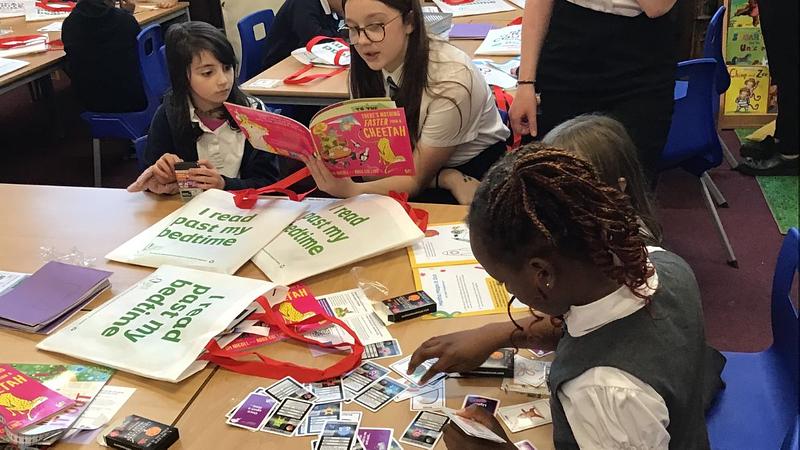
A positive reading culture begins long before children read independently. Through books, stories, songs, rhymes, conversations and play, children develop enjoyment of reading from the earliest years. Including your ELC class or setting can help create a whole school approach to reading for pleasure, strengthening connections between children, families, staff and the wider community.
For schools taking part in Reading Schools, involving your ELC setting helps create a genuinely whole school community approach to reading for pleasure and generates excitement around stories, songs and rhymes. This allows children to experience reading, books, stories, songs and rhymes as something enjoyable, meaningful and valued from the very beginning of their educational journey, while creating stronger connections between the ELC setting, school and wider community.
The Reading Schools Framework(this will open in a new window) is flexible and can easily be adapted to include ELC settings. Activities taking place within your ELC setting can contribute to your wider Reading Schools journey and provide valuable opportunities to demonstrate how reading for pleasure is embedded across your whole school community.
Most importantly, it reinforces the message that reading is for everyone and that reading for pleasure begins from birth.
What does reading for pleasure look like in ELC?
Reading for pleasure in ELC classes and settings is woven throughout play, relationships and everyday experiences. The focus is on enjoyment, choice, curiosity and meaningful interactions rather than formal reading instruction.
Suggested ideas and activities to support and include your ELC setting:
- Taking part in shared events such as Bookbug Sessions, World Book Day and Reading Schools Week
- Including ELC staff in reading and literacy planning
- Organising buddy reading and storytelling between older and younger children
- Creating book-inspired play spaces and storytelling opportunities
- Exploring high-quality books, sensory stories and tactile reading resources
- Using Bookbug songs, rhymes and resources
- Sharing author events, storyteller visits and Authors Live sessions
- Encouraging older pupils to create story sacks, puppets and storytelling resources
- Hosting family reading and storytelling events involving ELC children and families
Gathering evidence
There is no requirement to gather specific evidence relating to your ELC setting. However, many schools choose to include ELC activities within their Evidence Plan to demonstrate a whole school community approach to reading for pleasure.